
How Solar Street Lights Are Transforming Villages in Tamil Nadu
Introduction
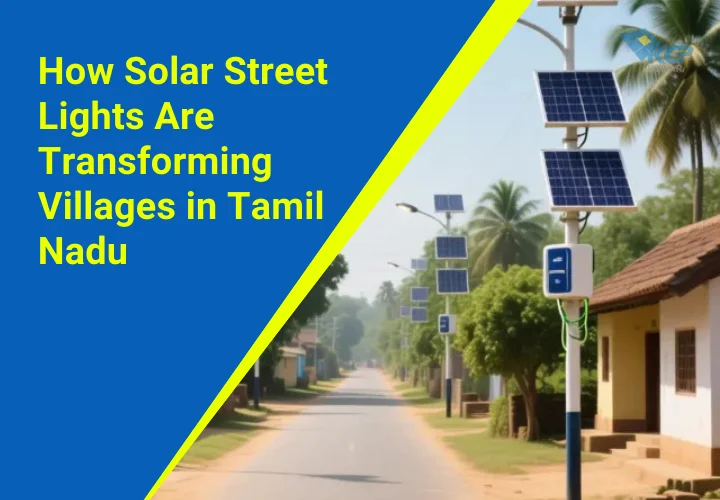
One of the most viable and affordable ways to address energy problems in rural India is solar energy, which has proven to be a sustainable solution. Across Tamil Nadu, in villages, solar street lights are slowly becoming a reliable substitute for traditional grid-based lighting. This blog discusses how solar street lighting in rural areas is transforming communities in Tamil Nadu, the challenges faced, and the role solar street lighting will play in the future development of rural areas.
Why Solar Street Lights Are Essential for Rural Areas
Rural regions often experience poorly maintained electricity supply, inadequate infrastructure and expensive maintenance for the traditional lighting systems. Poorly lit streets may affect safety, movement and daily activities in many villages after the sun goes down. A feasible alternative to these issues is installing solar streetlights.
Solar streetlights encourage energy sufficiency. This is particularly advantageous for agricultural societies where 24-hour lighting is used to maintain security and to enhance nighttime movement.
How Solar Street Lights Work
The solar panel captures sunlight during the daytime and transforms it into electrical power. This power is stored in the battery for use during the evening hours.
A common solar light on the street in the village has the following:
- A solar panel that gathers sunlight during the day.
- A rechargeable battery to store the energy generated.
- An LED lamp for illumination
- A controller to regulate charging and discharging.
- A sturdy pole structure for installation.
Benefits of Solar Street Lights in Villages
Here are the major benefits of installing solar street lights in village communities:
Improved Safety and Security
Streets with lighting minimise the chances of accidents and criminal activities. People are not afraid to go anywhere at night. Proper lighting around schools, healthcare facilities and community halls improves the safety of the population.
Reduced Electricity Costs
Because solar streetlights do not require a grid connection, there is no monthly electricity bill. This greatly reduces operational costs for village panchayats and local authorities.
Environmentally Friendly
The use of renewable energy in solar streetlights lowers carbon emissions and fossil fuel usage. This helps improve air quality and supports sustainable rural development.
Low Maintenance Requirements
Modern solar streetlights installed in villages are made to be durable. The maintenance requirements are lower than for conventional street light systems, as they use LED technology and efficient batteries.
Reliable Lighting During Power Cuts
Power failures are common in rural areas. However, solar lights function independently and therefore provide constant lighting.
Support for Economic Activities
Longer working hours enable small businesses and vendors to work beyond sunset. Agricultural workers also benefit from improved visibility in village pathways and fields.
Challenges in Implementing Solar Street Lights
Although solar streetlights have a wide range of benefits, their usage in rural centres has its own challenges:
The initial cost of installing solar streetlights in villages is a major obstacle to their implementation. The upfront investment can be high for smaller village councils, although the long-term savings would be substantial.
Even though solar streetlights require minimal maintenance, improper handling or lack of technical expertise may cause battery damage or panel inefficiency.
Performance may also be affected by weather conditions. Poor weather, with prolonged cloudy or rainy seasons, can reduce solar energy production.
Nevertheless, modern battery systems are designed to provide sufficient backup power to handle such situations.There is the risk of theft or vandalism in some regions. This can be addressed through proper community participation and safe installation practices.
The Future of Solar Street Lighting in Villages
The solar streetlights in Tamil Nadu have a bright future. As environmental consciousness grows and the policy backing improves, more villages are switching to sustainable lighting.
These systems are becoming more reliable and durable through improved battery storage, increased panel efficiency, and smart monitoring systems. Government efforts to encourage the use of renewable energy are also playing a positive role.
Conclusion
Villages in Tamil Nadu using solar street lights are provided with safe, affordable, clean, and cost-effective lighting. Solar streetlights have the potential to heavily contribute to the growth and development of rural populations with the aid of the government and the local community.
