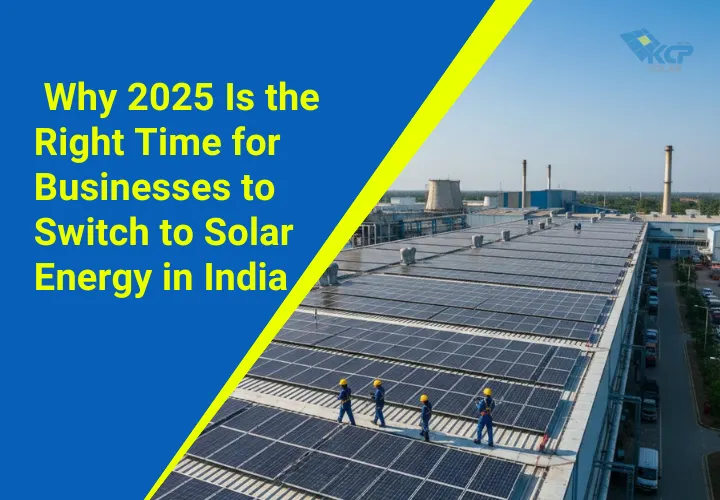
Electricity prices in India are rising dramatically and have put substantial strain on profit margins. Therefore, many manufacturers are looking for alternate sources of energy that are both reliable & affordable for their operations. Rooftop solar for industries is the most favourable option in this scenario. Currently, India is projected to reach 30 gigawatts (GW) of installed rooftop solar capacity by 2027, up from 17 GW in 2025. This increased growth reflects a clear need from the industrial sector to have access to solar solutions that provide them with more sustainable & smarter energy sources. In this blog, we will discuss why businesses should switch to solar energy in 2025 and the government incentives that they can benefit from.
How Rooftop Solar Works for Industrial Applications?
Rooftop solar for industries involves installing photovoltaic (PV) panels on building roofs to convert sunlight to electricity, which can be used onsite. It typically connects to on grid solar for industries, through which excess power can be fed back and credited. These solar plants lower dependence on costly grid power and minimise the hazards of outages. Generally, Industries consume vast amounts of electricity for machinery, lighting, and cooling, making them prime beneficiaries of this functionality.
Major Cost Saving Benefits of Industrial Rooftop Solar
Industrial rooftop solar systems reduce cost to enable the optimisation of business operational expenses. Following are some of the key financial advantages of installing a solar system:
On-site Energy Production: Integrating rooftop solar systems reduces reliance on the grid and lowers the monthly energy bills for industrial facilities.
Long-term electricity savings: Integrating rooftop solar systems reduces reliance on the grid and lowers the monthly energy bills for industrial facilities.
Minimal solar maintenance:Unlike traditional power-generation methods, solar systems require very little maintenance apart from occasional cleaning.
Net metering: Companies can sell excess power generated by solar systems back to the grid, creating an additional source of revenue or bill credit.
Reduced carbon footprint: The use of zero-maintenance solar energy contributes to the overall goal of global decarbonization and enhances reputation.
These benefits combine to secure financial and operational stability for industries switching to rooftop solar in 2025.
ROI & Payback Period: How Solar Increases Profitability
Industrial rooftop solar systems help businesses save money by cutting electricity costs after a 5–7 year payback period. With rising power prices and government subsidies, solar offers faster ROI. After the ROI has been achieved, users may continue to benefit from low-cost energy production for several decades, resulting in increased profitability, energy independence, and sustainable growth.
Government Policies, Subsidies & Tax Incentives
In India, rooftop solar adoption across industries is driven primarily by Government support programs. The following are the benefits of these programs:
State Capital Subsidies: 15% to 40% subsidy programs available up front, depending upon the state.
Depreciation of Solar Assets:Businesses can take 40% accelerated depreciation on solar assets as part of their tax calculation.
GST on Solar Equipment: The lower GST on solar power system components makes going solar through an EPC provider much cheaper than in the past.
Electricity Net Metering: Mandated net metering provides a regulatory framework that requires utilities to purchase any surplus solar power generated by customers, thus creating better Return on Investment (ROI).
Renewable Energy Certificates (RECs): Industries generate additional income from renewable energy certificates (RECs), which can be sold for future financial benefits.
These policies will help reduce total installation costs and improve the cash flow of companies investing in rooftop solar systems.
Why Choosing the Right Solar EPC Partner Matters
A successful installation of rooftop solar systems on industrial buildings requires the right EPC partner. The most prominent solar EPC companies, such as KCP Solar, provide quality installations with proven engineering skills customised to meet each customer’s unique energy requirement. Our Solar EPC company in India provides monitoring and maintenance services with little or no cost associated with ongoing operation. We also work closely with customers to assist them in obtaining the necessary approvals to comply with various local, state, and federal regulations.
Conclusion
2025 presents a unique opportunity for the Indian industry to derive benefit from solar energy. Industrial rooftop solar offers price stability, long-term power savings, and advantages for environmental policy. With government subsidies and financing from top solar EPC companies, the switch is both financially sound and durable. Industries should act now to lock in savings and future-proof their operations. And if you are interested in a maintenance-free system, then partner with KCP Solarand set up your zero-maintenance solar system today!
