
October 6, 2026
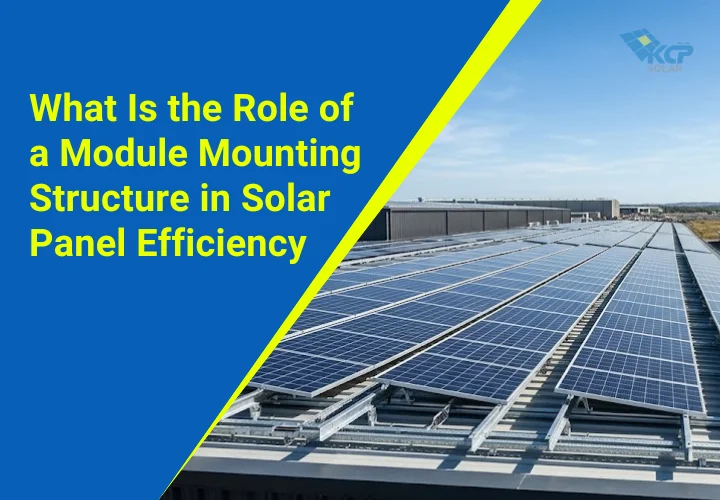
What Is the Role of a Module Mounting Structure in Solar Panel Efficiency
June 08, 2026
Introduction
The use of solar power has been rapidly gaining traction in residential and commercial buildings as well as industrial applications. Although most attention goes to the performance of the panels or the inverters, the structural foundation plays a crucial role in solar energy generation too. One such piece of equipment, which is sometimes overlooked but is fundamental to the performance of a solar installation, is the module mounting structure.
In this blog, we discuss the importance of module mounting structures in achieving efficiency and how to choose the right ones for a particular application.
What Is a Module Mounting Structure?
Module mounting structures are frameworks that securely attach solar panels to the roof, open ground, carport, or façade. It is usually made from galvanised steel or aluminium alloy and is designed to resist environmental forces such as wind, rain, snow and temperature changes.
The structure serves a more important purpose than just to stand panels upright, though:
Placing panels at the optimal tilt angle to capture the most sunlight throughout the day and year helps increase total energy production.
It helps ensure that panels do not move, vibrate, or be affected by mechanical stress.
Good solar mounting structures help ensure uniform airflow beneath the panels to maintain regulated operating temperature and output.
Why Module Mounting Structure Matters for Solar Panel Efficiency
Poorly designed module mounting structures or their improper installation in an otherwise good solar array can lead to a number of adverse effects.
The structure plays a crucial role in the efficiency of solar panels because:
- The panel orientation and tilt angle are wholly dependent on the mounting system. Even a few degrees of deviation from the optimum angle can significantly reduce energy production throughout the year.
- The distance between the panel and the mounting surface plays a big role in thermal management. When not adequately ventilated, heat builds up and directly reduces the electrical output of photovoltaic cells.
- Structural instability can result in micro-vibrations and mechanical stress on panel frames or junction boxes, leading to internal cell damage over time.
- A well-designed solar mounting structure guarantees panels are correctly aligned for decades of operation and will not sag or shift with time, preventing performance degradation.
Key Benefits of a High-Quality Module Mounting Structure
A solar installation's benefits across its lifetime depend on well-designed module mounting structures.
The following are the reasons why its quality is important:
- Hot-dip galvanised or anodised aluminium structures are long-lasting and corrosion-resistant. They can be used reliably for many years in coastal, humid, and high-pollution environments.
- Ease of installation reduces labour costs and shortens project timelines, especially with pre-engineered, modular rail systems that require minimal on-site fabrication.
- High load-bearing capacity ensures the structure remains robust even in extreme weather conditions, helping prevent damage to the panels and other associated electrical equipment.
- Compatibility with a wide variety of panel sizes ensures flexibility for system designers. They can thus choose the panel that best suits both their system's requirements and mounting constraints.
How to Choose the Right Module Mounting Structure
Choosing the right module mounting structure involves careful consideration of site-specific factors, panel requirements, and performance expectations.
The following are some important factors to consider:
- Different structures suit flat roofs, pitched roofs and metal sheet roofing differently. The roof type and load-bearing capacity should therefore be determined before choosing a rooftop mounting system.
- The structures for ground-mounted installations must be designed to account for soil conditions, with an adequate foundation system such as driven piles, concrete ballasts, or screw anchors.
- The structural specification should take into account the wind and snow load calculations specific to a particular geographical location, determined in accordance with local building codes and safety standards.
- Upfront cost and life cycle durability should be taken into account when choosing materials.
Conclusion
Module mounting structures aren't just structures that support the panels; they are an active factor in solar panel efficiency, as they impact tilt, temperature control, alignment, and long-term structural integrity.
Contact us now to determine the most suitable mounting solution for your particular project.
Latest Post


Solar Panel Price in India: What It Costs and How...
October 6, 2026

Solar Company in India: The Complete 2026 Guide
September 9, 2026